Getting Results
Eat A Healthy, Anti-Inflamitory Diet
Achieving results is not always easy, it often requires a significant amount of work to make the changes you see on social media. Here is our list of the most important things that you should be doing to increase your chances of getting results.
*Always discuss with your GP or a medical professional before implementing new health protocols or routines.
Eliminate Grains
Grains, such as cereals, bread and pasta can cause abdominal bloating if consumed in excess. Bloating can prevent the core muscles from working properly, leading to instability in the spine and pelvis. Reduce or eliminate grains and make sure to notice which foods cause you bloating or abdominal discomfort and eliminate them from your diet to help improve your biomechanics. We are not saying you can’t ever eat grains, but making them an everyday or even weekly habit is going to limit your progress. Having good intra-abdominal (core) pressure is the foundation for getting good results and consuming grains regularly is one of the biggest limiting factors for achieving this.
Eliminate Caffeine
Caffeine is a diuretic, meaning it dehydrates the tissues in your body. Many people’s tissues are probably dehydrated already because of restricted and poor movement, so regularly consuming caffeine can make this problem worse. Caffeine, as a stimulant drug, can also disrupt the circadian rhythm and reduce sleep quality. Sleep is critical for health, and anything that disrupts it is a big no-no. Chronic caffeine consumption disrupts the body’s ability to regulate energy levels on its own without an external crutch. Caffeine can also contribute to gut irritation and bloating, which inhibits core muscle function and leads to pelvic and spinal instability. If you are dependent on caffeine, try to wean yourself off of it and opt for decaffeinated alternatives.
Eliminate Seed Oils
Many common seed oils, like soybean, corn, sunflower, and canola, are highly processed and very high in omega-6 fats. While omega-6 fats are needed in small amounts, most people get too much, which can throw off the balance with omega-3 fats that help support heart, brain, and joint health. Processing these oils with heat and chemicals can also create small amounts of oxidized fats—fats that have broken down and may promote inflammation in the body.
Choosing whole-food fat sources like olive oil, avocado, and fatty fish gives you healthy fats in their natural balance, along with extra nutrients, and keeps your diet closer to minimally processed foods.
Eat Real Foods
Whole, minimally processed foods are usually the best foundation for a healthy diet because they naturally contain more of the nutrients your body needs to function well. Foods like vegetables, fruits, eggs, meat, fish, and dairy provide important nutrients such as protein, fibre, healthy fats, vitamins, and minerals. These nutrients support energy levels, muscle recovery, digestion, and overall health. Many highly processed foods, on the other hand, have been refined or altered in ways that remove some of these nutrients while adding ingredients that make them easier to overeat. Building most of your meals around whole foods makes it simpler to get the nutrients your body needs without having to think about it too much.
Embrace Soberiety
We recommend sobriety. Regular consumption of alcohol or other drugs is going to be harmful for your health.

Avoid Passive Stretching
In real movement and athletics, stretching usually occurs not in isolation, but as part of a wider, integrated and dynamic movement process. Muscles in one part of the body contract during walking or running to lengthen muscles elsewhere, resulting in rhythmic cycles of stretching and recoil throughout the body. When we perform passive isolated stretches, we disregard how stretches are created in real movement and decondition proper mechanics from the nervous system and muscular system. Passive stretching encourages the body to become hypermobile and unstable at the joints, which is a risk factor for pain, injury and may even relate to psychological symptoms such as anxiety. A better alternative when you need to break up or hydrate an area that feels stiff or tight is myofascial release (self-massage), which can be done with a variety of simple tools such as your own hands, a lacrosse ball, or medicine balls.
The Movement Elimination Protocol
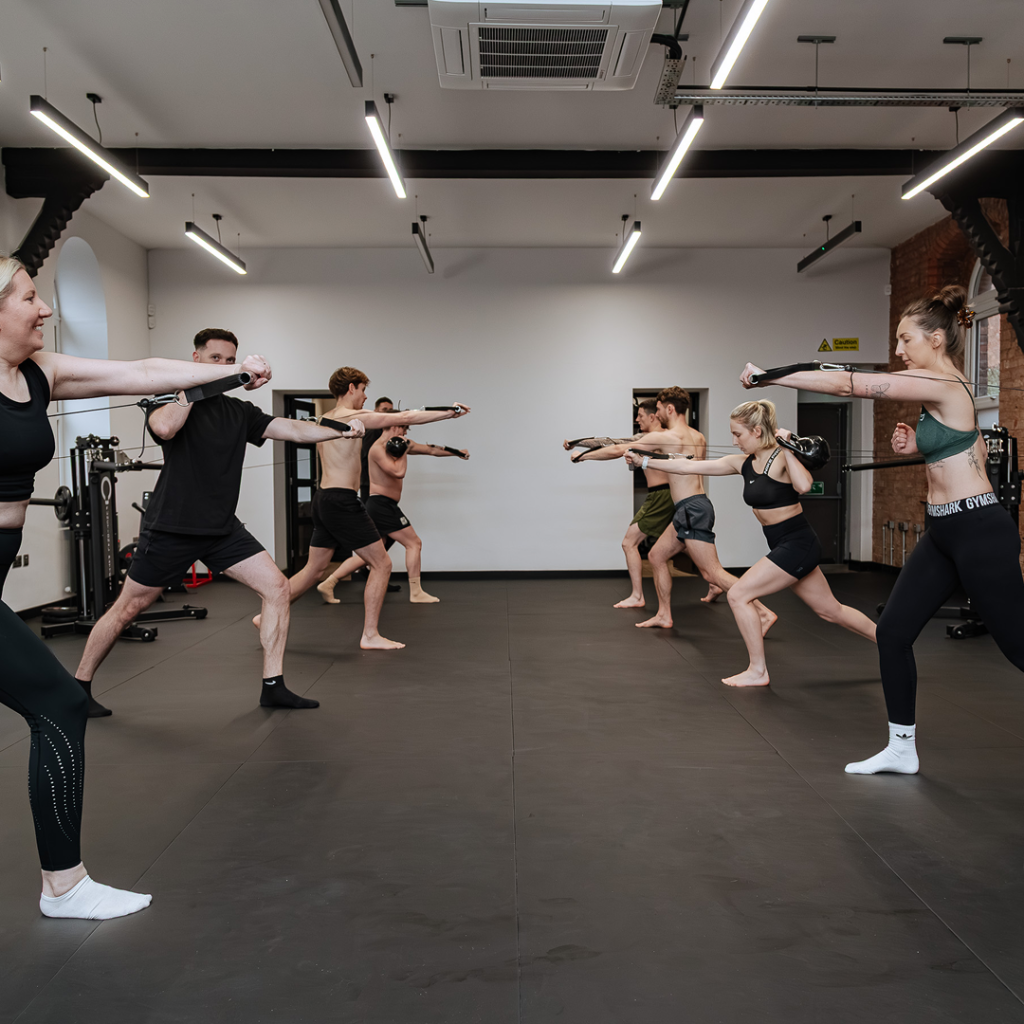
When people present with abdominal pain, allergic reactions or various health issues, dieticians are quick to suggest elimination protocols which involve reducing the total number of foods consumed, and rebuilding from there to discover which foods are causing the issue. The same can be true of exercise and physical movement. If you are dealing with problems in your body and poor movement mechanics, you may be exacerbating these issues further if you continue mindlessly exercising – every step you take without thinking about it reinforces the way you already move. If you are dealing with pain or injury, it can be useful to reduce or stop other forms of exercise to reduce the chance of making any issues worse. This reduces the chances of confounding the effects of Functional Patterns training on your body and movement. This is not about fear-mongering or discouraging people from moving. Exercise is healthy and we are all about working out, but in order to get to grips with your biomechanics, it can be helpful to reduce your inputs for a while rather than constantly throwing more and more noise at your body in the form of excessive mindless movement.
Optimise Your Light Environment
Humans evolved on Earth in natural light like all other animals and only began to be influenced by artificial light with the advent of light bulbs in 1879. This means our biology is adapted to deal with the natural light of the sun and fire, not being bathed in bright artificial light for hours on end, day after day. Chronic exposure to artificial light, especially at night, is stressful for the body and reduces the quality of your sleep. While avoiding artificial light is not practical the majority of the time, it is helpful to maximise the time you spend outside in natural light, as much as possible, and minimise the time you spend inside under artificial light. Using blue light blocking glasses in evenings and using free software such as “f.lux” to filter light on your computer or laptop screen, and spending at least some time outside daily can make a huge difference in your ability to relax and sleep.
Engage With The Functional Patters Ecosystem
Follow and engage with @functionalpatterns @projectfunction @theleverking @manchesterbiomechanics on Instagram. Watch the content and study the content. There are also several educational video courses produced by Functional Patterns designed to teach you various exercise techniques that you can use to train your whole body and develop various athletic skills. There is a blog section on functionalpatterns.com dedicated to sharing FP-related perspectives on various issues related to health, diet, training and behaviour. Don’t just take it all from us – go and get the information straight from the source yourself.
Watch Athletes Moving
Functional Patterns training is all about helping people to move and organise their bodies better. To do this, we need to use athletic humans who already do that well as a reference point. In high-level movers, we see aspects of the ideal standard we are trying to help our clients move towards. There are certain attributes and movement strategies that essentially all elite movers have in common, and by studying the way these people move, we can establish a benchmark of what we are trying to mimic in our training. Put simply, developing an eye for better and worse movement will help you understand how our training is relevant and what we are trying to achieve. It will also help you to apply principles from our training on your own. If you do not study or observe athletic movement, you risk feeling lost and not understanding of what to do in your training and why. We can learn from the vast majority of high-level athletes, but some particularly impressive movers worth studying include Barry Sanders, Bo Jackson, Floyd Mayweather, Usain Bolt and Florence Joyner-Griffith. Watch film full speed and also slow it right down to watch certain videos frame by frame.

Learn Basic Anatomy
If you were trying to fix a particular machine, you would need to develop some level of understanding about how that machine looks and works. The human body is no different. In our sessions, we want to apply anatomy practically and help teach you how to coordinate and organise your own anatomy, so it helps if you understand anatomy at least a little yourself. Understanding the basics of anatomy such as the basic major bones and muscles of the human body will help you understand the work you do at Manchester Biomechanics better and will help you communicate with your practitioner about what you are feeling in your body when you move. “Anatomy Trains” by Tom Myers is a great resource.
Do Your Homework
If you are training with us, it’s likely because you want to improve your movement and posture. Getting good at moving and organising your body, like any other skill, is dependent on how much effort and practice you put in. If you practice techniques from your sessions, work through Functional Patterns’ video courses and study your movement and training on your own, you will improve much faster and hit fewer plateaus than if you barely take an interest in your improvement outside of the time you spend in the gym. When your practitioner sets you homework, make sure you do it.
Manage Your Stress Response
Chronic stress is one of the key drivers of countless diseases and health problems. If you are stressed out, this can have an immense negative impact on your physical and mental wellbeing, and spill over into every aspect of your life. Too much stress will disturb your sleep, which is required for your body to remodel and take on the changes we are trying to induce with our training. It will also affect your ability to think clearly, which can lead to you making poor and unhealthy decisions. Try to eliminate unnecessary sources of stress from your life, and work on managing your response to stressors in your life. Tracking your heart rate variability (HRV) over time with a simple HRV device can be a good way of monitoring whether your stress response is improving or worsening.
Take An Active Interest In Solving Your Problems
If you are not interested in learning piano, you will never get good at piano. If you don’t care about learning how to box, you’ll never become a good boxer. Becoming a problem solver regarding your own body works the same way. If you want to get impressive results and make real change to your body, you must become interested in doing so and take responsibility for your own outcomes. This means implementing the advice listed on this page, asking your practitioner questions, practicing on your own, and simply thinking about your own posture and movement in your daily life – get interested!
We hope this helps you to get results, and if there is anything you are unsure on then please feel free to ask any of our practitioners!